The research on adverse childhood experiences is national. The circumstances in which people respond to it are entirely local, and Montana's circumstances are distinctive enough to change what a sensible response looks like.
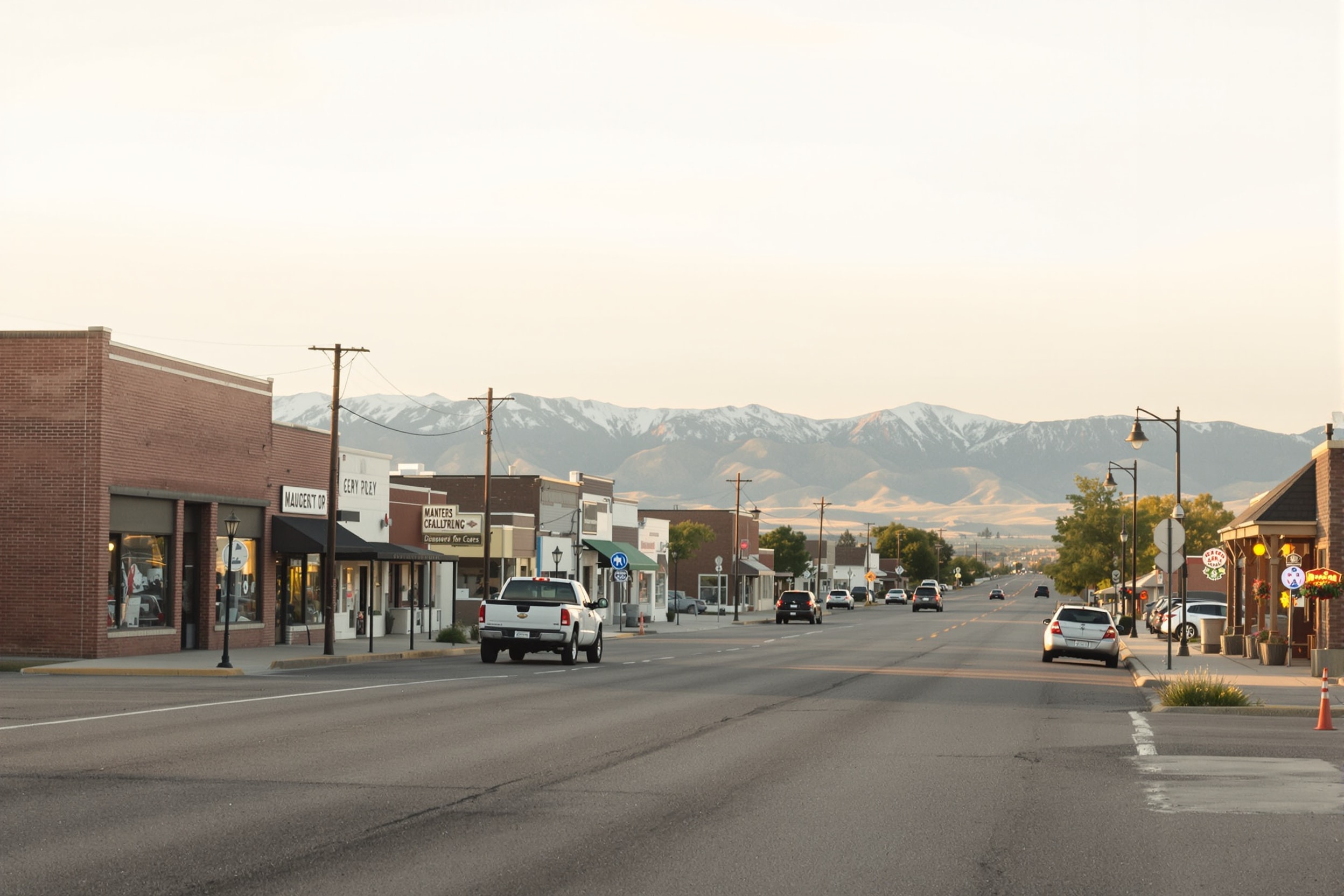
This page is about those circumstances: what makes responding to childhood adversity harder here, what makes it easier, and why importing a model designed for a metropolitan county usually does not work.
Distance is the defining condition
Montana is the fourth-largest state by area and among the least densely populated. A majority of its counties meet the federal definition of frontier. In practice that means a family may live an hour or more from the nearest clinic, and considerably further from a paediatric specialist or a child psychiatrist.
Distance is not merely inconvenient. It determines whether a weekly appointment is realistic at all. A therapy course that assumes eight sessions assumes eight round trips, in winter, often during working hours, frequently with other children in the vehicle. Programmes that work in a city sometimes fail here for reasons that have nothing to do with their clinical content.
The Rural Health Information Hub documents this pattern across rural America: not an absence of need, but a persistent mismatch between where services are designed to be delivered and where people actually live.
Workforce, not willingness
Much of Montana is designated as a shortage area for mental-health professionals. The consequence in a small town is not usually a bad service — it is a very thin one. A single school counsellor may cover several buildings across a large district. A clinic may have one behavioural-health position that has been vacant for a year.
This shapes what is worth attempting. In a setting with one counsellor for six hundred students, the highest-value investment is rarely another referral pathway; it is making every adult in the building — teachers, aides, bus drivers, kitchen staff, coaches — better at the ordinary interactions that buffer stress. That is one reason the trauma-informed approach described on our schools page has taken hold in rural districts: it is a way of using the staff a district already has.
Small communities cut both ways
Everyone knowing everyone is protective and constraining at once, and it is a mistake to treat it as only one of those.
On the protective side, a struggling family is far more likely to be noticed early. Informal support arrives without a referral. The protective factors the research identifies — a caring adult, a place to belong, being known — are in some ways easier to supply in a town of nine hundred than in a suburb of ninety thousand. The coach, the librarian and the neighbour are all still load-bearing here.
On the constraining side, privacy is thin. Walking into a counsellor's office when the receptionist is your neighbour and the parking lot is visible from the main street is a real barrier. Reputation carries weight, and stigma around mental health, addiction and family difficulty persists more strongly where anonymity is impossible. People delay asking for help for reasons that are entirely rational given the setting.
Pressures the ten questions do not capture
Several circumstances common in Montana affect children substantially without appearing anywhere in the standard list described on the ten categories.
- Seasonal and extractive work. Ranching, agriculture, construction, energy and fire seasons produce long absences, unpredictable income and boom-and-bust cycles that reach into households.
- Weather and isolation. Long winters, closed roads and genuine remoteness compound anything already difficult and cut off the informal contact that usually buffers it.
- Distance from extended family. The reliable adult the research identifies is often a grandparent — three hundred miles away.
- Historical and intergenerational trauma. Montana is home to several tribal nations and reservation communities where the effects of federal policy, boarding schools and displacement remain present in family histories. That is a form of adversity the ten questions were never built to measure, and it is not addressable by a questionnaire designed in a California clinic.
What tends to work here
Rural practitioners consistently describe a similar set of adaptations. Fold support into places families already go rather than building new ones — schools, clinics, libraries, extension offices, county fairs. Use telehealth for what it is genuinely good at, which is widening the choice of clinician rather than replacing local relationships. Train broadly and shallowly rather than narrowly and deeply, because the people with the most contact hours are rarely the specialists. And accept that in a small community the informal network is not a fallback for the formal system; frequently it is the system.
The Montana Department of Public Health and Human Services is the authoritative source for statewide programmes, county contacts and current data. Our page on community work covers what individuals can reasonably do, which is generally more than people expect.